1. Calculating Your Actual Energy Budget (The Daily Audit)
Before buying a single battery, build an honest spreadsheet of every single consumer you plan to operate. Wattage divided by voltage (nominal 12.8V for lithium) gives you current in Amperes. Multiply that by expected daily run hours to find your Amp-Hour (Ah) consumption.
A representative moderate daily setup might include:
- 12V Compressor Refrigerator: 35–45 Ah/day (varies heavily with ambient temperature and insulation quality).
- Diesel Heater Fan & Glow Plug: 15–25 Ah/day during autumn or winter touring.
- Interior LED Lighting: 5–10 Ah/day across layered evening zones.
- Water Pump (Diaphragm): 2–4 Ah/day (short bursts of 5A).
- USB-C Device & Laptop Charging: 25–50 Ah/day for two active remote workers.
Totalling those yields around 82–134 Ah per day. If you want two full days of static off-grid autonomy in cloudy weather with zero charging input, your usable battery reserve needs to exceed 200–250 Ah.
2. Battery Chemistries: AGM vs. Lithium Iron Phosphate (LiFePO4)
Traditional Absorbed Glass Mat (AGM) lead-acid batteries are economical upfront, but they present significant limitations for mobile living: they should not routinely be discharged beyond 50% of their rated capacity without suffering rapid degradation, and they are remarkably heavy.
Lithium Iron Phosphate (LiFePO4) has rightfully become the gold standard in modern camper conversions. While carrying a higher purchase cost, LiFePO4 delivers roughly 80–90% usable depth of discharge, sustains thousands of charge cycles, weighs less than half of an equivalent lead-acid bank, and accepts high charge currents much faster. Note that lithium batteries must never be charged below freezing (0°C) without internal heating mats or smart BMS cutoffs to prevent permanent dendrite damage.
3. The Tri-Source Charging Architecture
Reliable European touring relies on three complementary charging pillars rather than trusting a single power source:
A. Alternator Charging (DC-DC Converter)
Modern Euro 5 and Euro 6 vehicles feature smart alternators that lower output voltage to reduce emissions, making traditional split-charge relays obsolete. A dedicated DC-DC booster charger regulates incoming voltage, protects your starter alternator from overheating, and delivers the exact multi-stage profile required by your leisure bank.
B. Solar Photovoltaic (MPPT Controllers)
Rigid monocrystalline panels or aerodynamic semi-flexible modules on the roof provide silent, passive replenishment while parked off-grid. Always pair panels with an MPPT (Maximum Power Point Tracking) solar charge controller, which is up to 30% more efficient than basic PWM controllers in overcast European conditions.
C. Mains Shore Power (AC-DC Multi-Stage Charger)
An external European CEE inlet linked through a Residual Current Device (RCD/GFCI) and circuit breakers lets you plug into campsite hookups or workshop power to top up banks and run high-draw appliances without battery depletion.
4. Inverters and 230V AC Mains Power
If you need to power standard household appliances—such as an induction cooktop, an espresso machine, or electric bike battery chargers—you will need a pure sine wave inverter. Modified sine wave inverters are cheaper, but they generate harmonic distortion that can overheat sensitive electronics, hum through audio systems, or damage power tool chargers.
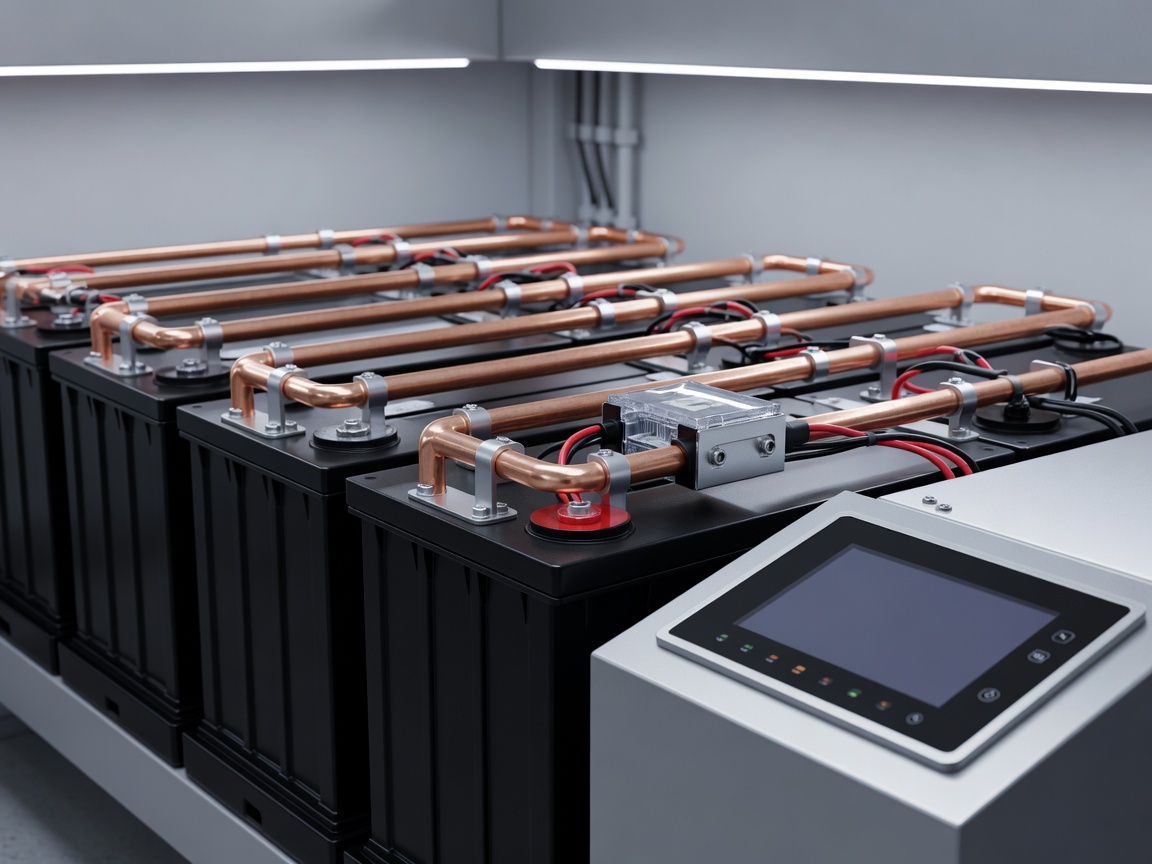
Be mindful of the cable cross-section requirements: a 2,000-watt inverter running at full load draws over 170 Amps at 12V. That level of current requires heavy 50mm² or 70mm² copper cabling, an appropriately rated Class-T or Mega fuse within 300mm of the battery terminal, and rigorous thermal ventilation.
Professional Commissioning Recommended
Automotive electrical work carries severe fire risks if conductor gauges, terminal crimps, and fusing are miscalculated. We strongly recommend having an experienced auto-electrician inspect and sign off your main distribution board before final operation.