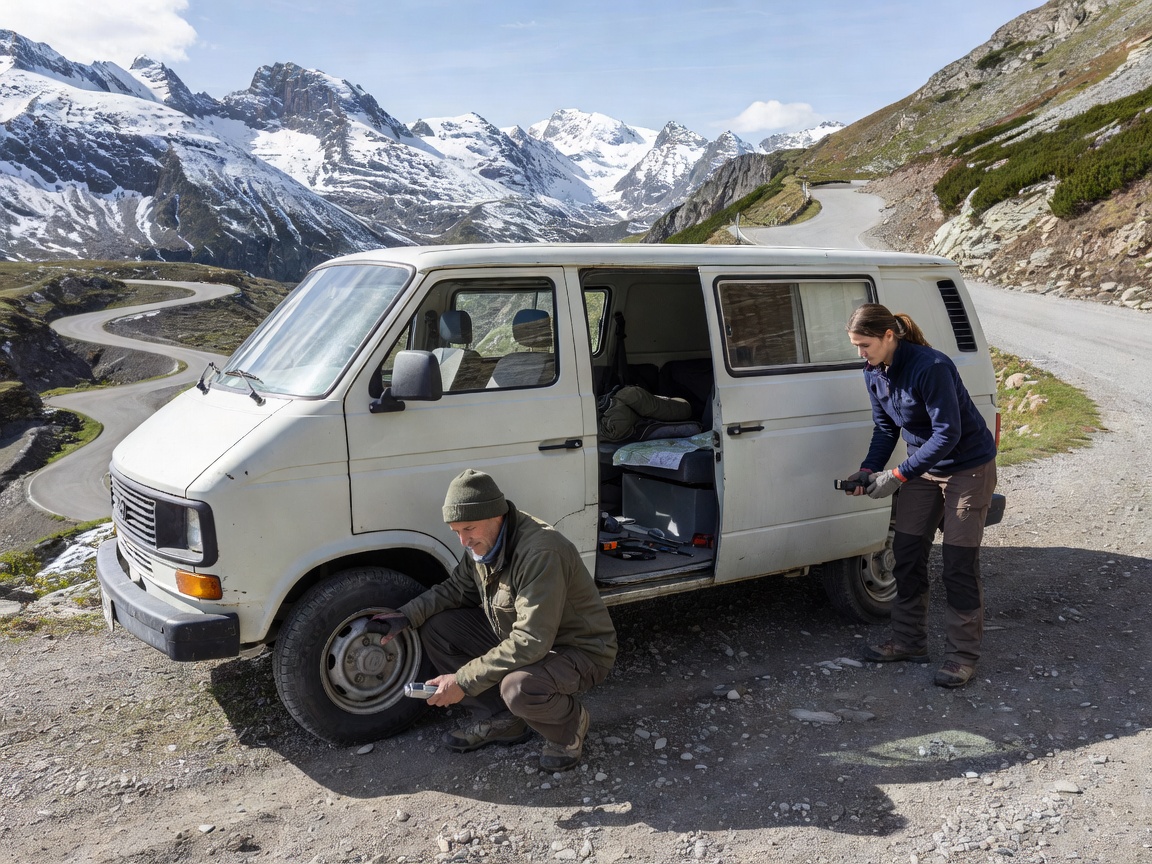
1. Pre-Departure Mechanical & Running Gear Inspection
Because a converted campervan operates near its maximum gross weight almost continuously, suspension bushings, brakes, and tyres work much harder than in an empty delivery van. Perform these checks before setting off:
- Tyre Health and Pressure: Confirm tyres are commercial-rated (marked 'C' or 'CP' for campervans). Inspect tread depths and inflate to cold pressures matched to your verified axle weights, not the generic door-jamb empty rating.
- Braking System: Check pad thickness and ensure brake fluid is less than two years old to avoid moisture boiling on prolonged mountain descents.
- Fluids & Filters: Verify engine oil level, transmission fluid condition, coolant strength, power steering fluid, and windshield washer reservoir.
- Suspension Sag: Check if rear leaf springs or coils are bottoming out on rubber bump stops; if so, consider helper springs or air suspension assist before departure.
2. The Living System Shakedown
Never embark on a three-week international tour without conducting an overnight "driveway test" or local weekend camp first. Test all domestic sub-systems under real conditions:
- Fill freshwater tanks to 100% and test for hidden pipe weepage while driving over rough pavement.
- Run your diesel or LPG cabin heater at maximum output for 45 minutes to verify exhaust sealing and fuel priming.
- Verify that your carbon monoxide and LPG gas alarms respond correctly and have fresh backup batteries.
- Check that all cabinet catches hold firm over simulated emergency braking.
3. Pan-European Cross-Border Regulations
Crossing European borders is delightfully fluid within the Schengen zone, but vehicle carriage laws change significantly from one country to the next. Always research current requirements for each transit nation:
Mandatory On-Board Equipment by Country
While requirements vary, carrying high-visibility reflective vests for every occupant (stowed inside the cabin, not buried in the garage), two warning triangles, a certified first aid kit, and an automotive fire extinguisher is good practice across the continent. In countries like France, Crit'Air emissions stickers are compulsory for entering low-emission city zones (ZFE-m), and several Alpine nations mandate carrying certified snow chains during winter months.
4. Navigation, Off-Grid Connectivity & Offline Redundancy
Standard car navigation applications assume a nimble passenger vehicle. They will happily direct you down a 2.0-metre-wide cobblestone alley in an ancient Italian village or under a low stone railway bridge in rural England.
Use dedicated camper or commercial vehicle navigation software where you can input your exact vehicle height, width, length, and weight class. In addition, download offline topographical maps for regions with poor cellular connectivity, and keep a paper road atlas in the glove compartment as an unfailing fallback.
5. Field Repair Toolkit & Spare Consumables
You don’t need an entire machine shop, but a compact, curated repair kit can resolve 95% of minor touring setbacks:
- Assortment of automotive blade fuses (mini, standard, and maxi sizes matched to your boards).
- Digital multimeter with needle probes for tracing loose 12V connections.
- High-strength gaffer tape, self-amalgamating silicone hose wrap, and heavy-duty cable ties.
- 12V air compressor with digital pressure readout and a tubeless tyre puncture repair plug kit.
- Spare 10mm and 13mm spanners, screwdrivers with Torx bits commonly used on commercial van bodies.
- A 1-litre bottle of vehicle-specific engine oil and premixed coolant.
6. Seasonal Adaptation: Summer Heat vs. Winter Freezing
In peak Mediterranean summer, passive heat mitigation is paramount: park rear doors toward the prevailing breeze, crack your roof fan on exhaust mode, deploy thermal reflective windshield screens, and cook outside whenever possible to keep galley heat out of the bedroom.
In sub-zero winter touring, keep grey water dump valves cracked open over an external bucket (an unheated external grey tank will freeze solid, cracking its drain valve), circulate warm air behind bed mattress slats using breathable underlays to prevent condensation, and ensure your diesel fuel is treated with anti-gel winter additive.