1. The Bed Debate: Fixed Platform vs. Convertible Dinette
This is the defining decision of any camper floor plan. A transverse or longitudinal fixed rear bed provides instant rest without moving cushions, allows a genuine high-density orthopedic mattress, and creates a vast "garage" underneath for bikes, technical gear, and water tanks. The downside? It consumes nearly half of your van’s interior footprint for the twenty-four hours of every day.
A convertible U-shaped dinette or fold-down rock-and-roll bench frees up immense living space, lets you host four dinner guests comfortably, and provides an open, airy visual corridor through rear barn doors. However, you must make and unmake the bed nightly, and sleeping seams across split cushions can be taxing on long trips. For solo travellers or working remote couples touring for months at a time, fixed sleeping areas tend to win out for sustained mental and physical comfort.
2. Cabinetry Construction & Weight Discipline
Standard domestic MDF or solid hardwood has no place in a campervan: it is far too heavy, retains humidity, and fails under chassis vibration. The benchmark material for premium European atelier conversions is lightweight, multi-laminate poplar ply or birch plywood, typically faced with scratch-resistant high-pressure laminate (HPL).
To prevent cabinet doors from bursting open during aggressive mountain switchbacks or emergency stops, avoid domestic magnetic catches. Use positive mechanical push-button latches, marine compression catches, or heavy-duty slam latches rated for automotive deceleration.
Pocket Doors and Tambour Sliders
In narrow corridors between galleys and wet rooms, standard swinging cabinet doors quickly block passageways. Installing vertical or horizontal tambour roller doors saves floor clearance and eliminates the hazard of swinging doors in confined spaces.
3. Layered Lighting: Ambiance and Battery Conservation
Stark, clinical overhead downlights make a van feel like an operating theatre. Instead, design three distinct lighting circuits, all powered from your 12V DC system and dimmable:
- Task Lighting: High-CRI 4000K downward spotlights positioned over galley preparation areas and reading stations.
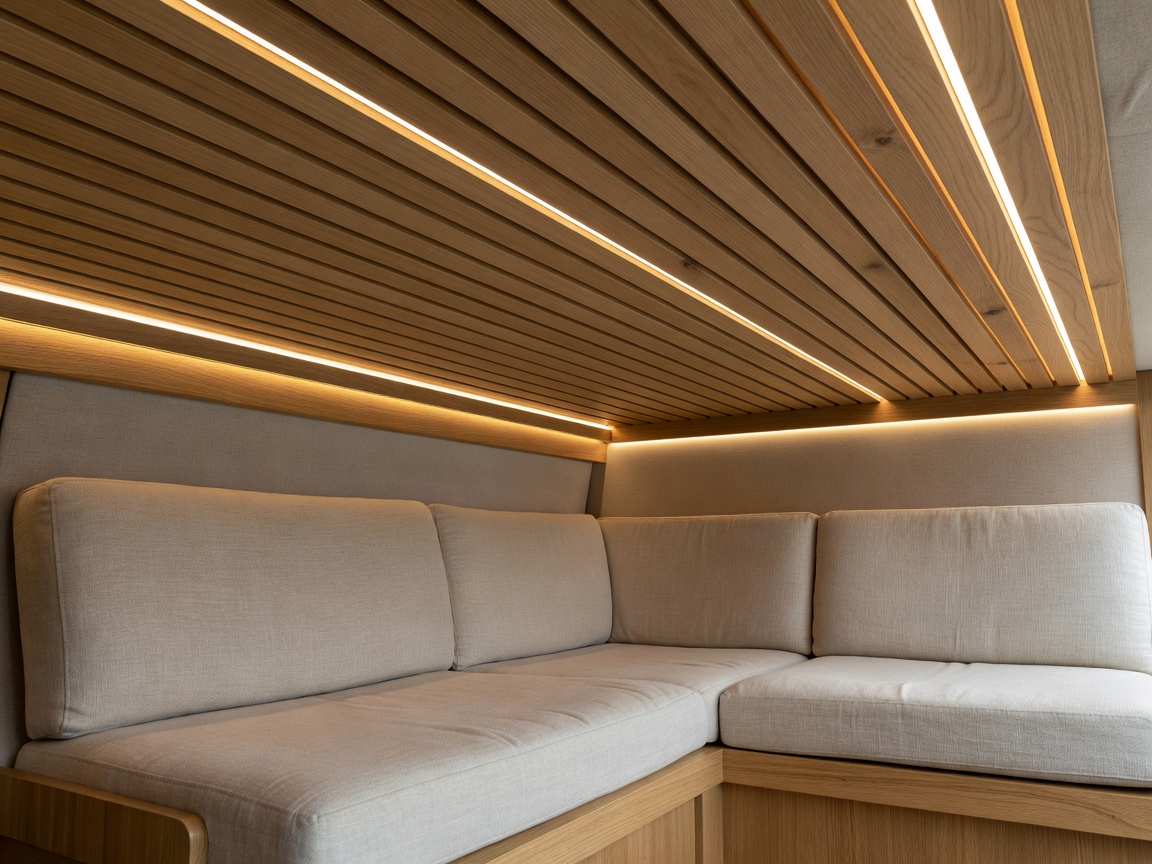
- Ambient Perimeter Lighting: Indirect 2700K–3000K warm LED strip runs recessed under upper lockers or beneath toe kicks, bouncing soft illumination off natural wood surfaces.
- Night Navigation Lighting: Low-intensity floor-level amber or red guides that allow night-time movement without disrupting circadian rhythms or blinding your sleeping partner.
4. Wall Finishes, Acoustics, and Tactility
Campervans can easily suffer from harsh acoustic echo and road tyre hum. Lining bare metal window surrounds and ceiling panels with four-way stretch automotive acoustic carpet or needle-punch recycled felt softens the soundscape dramatically.
Pairing these felted zones with slatted natural timber ceilings (such as lightweight paulownia or cedar) brings organic scent, warm micro-shadows, and architectural elegance into the vehicle. For heavy-wear areas like wet walls and entry surrounds, cleanable textured vinyl or marine-grade washable canvas provides rugged longevity.
5. Balancing Daylight and Thermal Privacy
Large glass windows make a vehicle feel spacious, but automotive glass is a thermal sieve—bleeding heat in the sub-zero winter and acting as a greenhouse under southern Mediterranean sun.
Use double-glazed acrylic camper windows with integrated cassette blinds and flyscreens where possible. For cab windshields and front side glass, custom-fit multi-layer insulated thermal window screens with magnetic rims are indispensable. They block exterior street lamps, prevent curious outside eyes, and drastically cut down windshield condensation.